Mass Times || Visiting Clergy || Support Us

We are companions on the journey, breaking bread and sharing life; And in the love we bear is the hope we share for we believe in the love of our God...
Sunday Masses:
Sat (Vigil) – 6:00pm
Sun – 8:00am, 10:00am, 6:00pm
Weekday Masses:
Monday to Friday – 7:00am
Saturday – 8:00am
Reconciliation:
Saturday – 5:00pm
Other Schedules:
Filipino Mass : 12:00 NN every first Sunday of the month
Syro-Malabar Mass: 12:30 PM every fourth Sunday of the month
Healing Mass – 10:30 AM every first Tuesday of the month
Saint John of God Hospital Chapel Mass – 11:00 AM every Thursday
Dalyellup Catholic Community – 10:00 AM every Sunday at Saint John of God Hospital Chapel
Gelorup Carmelite Monastery – 9:00 AM (Monday to Saturday); 8:30 AM every Sunday
Baptism, Wedding, Funeral: by arragement at the Parish Office
11 Money Street, Bunbury, Western Australia, 6230 P.O. Box 2005, Bunbury, Western Australia, 6231
CATHEDRAL DEAN AND VICAR GENERAL
Very Rev Pierangelo Repuyan PhD VG
Associate Priests
Rev. Fr. Joel Villanueva, OSJ
Rev. Fr. Nathan Barrie, EKHS
Deacon
Ian Lewis
OUR PARISH MISSION
Our mission is to continue growing as a community where people can meet Jesus Christ and grow in his life and mission in the whole Catholic Faith.
OUR PARISH VISION
To be parish that is open and transparent, nurturing, united and inclusive. To be community that is welcoming, embracing and caring for families, youth, and valuing cultural diversity.

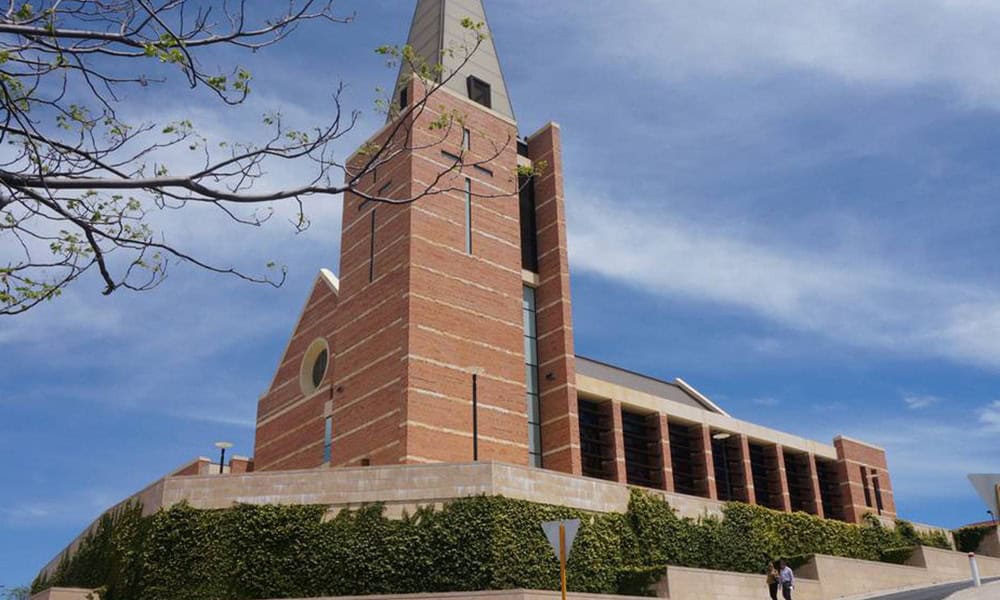
Spread over 1.25ha, the Cathedral Precinct was originally identified as a future site to provide a church for the growing Bunbury parish in the early 1900’s
The foundation stone of St Patrick’s was laid in 1919. Its doors were opened to the local community just two years later. Some of the older parishioners still recall how local limestone rocks were carried up from the beach on bullock trains, and how, as children, they carried bricks, two at a time, for the exterior works. Others speak of stories they heard from their parents and grandparents about their part in building the Cathedral. Other Bunbury residents again, as well as people from other South West areas, recall watching the Cathedral being built.
Originally St Patrick’s was not a cathedral, but a parish church. However, in 1954 it was proclaimed a cathedral by Pope Pius XII when he established the Catholic Diocese of Bunbury.
On 16 May 2005, a tornado tore through Bunbury, devastating the city and shifting the Cathedral on its foundations resulting in its demolition.
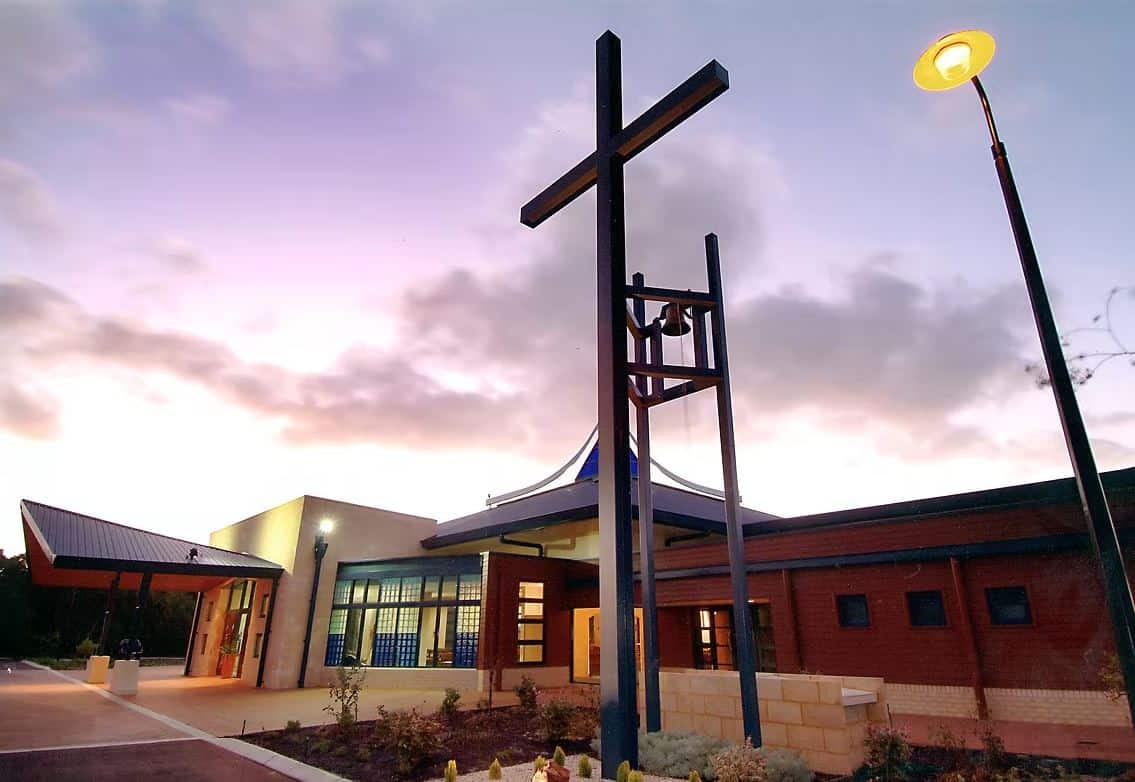
The New St Patrick’s Cathedral was built over a 5 year period, and was dedicated on 17th March 2011 by Bishop Gerard Holohan, the fourth Bishop of Bunbury.
According to the very earliest surviving work on architecture, Vitruvius’ De architectura, good buildings satisfy three core principles: Firmness, Commodity, and Delight. Architecture can be seen as the balancing of these three elements, with none overpowering the others.
elevation of cathedral. According to the very earliest surviving work on architecture, Vitruvius’ De architectura, good buildings satisfy three core principles: Firmness, Commodity, and Delight. Architecture can be seen as the balancing of these three elements, with none overpowering the others.
Whilst coordinating these essential elements, Cathedral architects of every age have endeavoured to interpret and to express the presence and importance of God. Through the ages, Cathedrals have been in the vanguard of new architecture styles, using the most advanced materials and the most innovative construction methods available.
The rebuilding of the Cathedral precinct will extend this tradition, while utilising many familiar references from Catholic art and architecture from the earliest times.
To achieve this, and meet the expressed wishes of the community, the rebuilding of the Cathedral precinct required an architect with a proven and outstanding track record, but with more than just simply technical skills. According to Vitruvius: “Architecture is a science, arising out of many other sciences, and adorned with much and varied learning: by the help of which a judgement is formed of those works which are the result of other arts.” Simply put, our architect needs a philosophy, a perspective and an appreciation, for life, the universe and everything.
Our requirements were specific and exacting. The successful architect would need:
Extensive experience with buildings of this scale;
To be recognised for work across Australia and overseas;
To have earned multiple awards for his work, and earned the respect and recognition of his peers;
To have a proven record of keeping within budget;
To have a reputation for being easy to work with, and concerned with meeting clients’ requirements; and
To have the desire to personally design and supervise the rebuilding from beginning to end.
Most significantly, in light of the findings of our community consultation programs, the architect would need demonstrated expertise in the area of traditional church buildings, together with proven mastery of modern techniques.
As the selection criteria became more defined through ongoing community consultations, as well as expert advice from those with experience in cathedral building, it became clear that an ‘iconic’ architect was needed. The architect would need not only to be creative, highly skilled and well accomplished, but also someone who would consider it an honour to join the select and highly credited few in the world who have designed a cathedral. We were looking for someone who would understand and appreciate the significance of this once in a lifetime opportunity.
After a long and meticulous search, the award winning architect Marcus Collins B Arch (UWA), FRAIA was commissioned to plan and design the new Cathedral precinct, including the building of a new cathedral. He has widely recognised skills and an impressive list of major works to his credit.
Marcus is an iconic architect with both national and international experience. He is well regarded by his peers and previous clients.
His brief, developed from the community consultation, includes designing a Cathedral that;
Will last at least 300 years;
Is built on the same prominent location as the old St Patrick’s Cathedral;
Is an iconic building with the lines of a traditional Cathedral, yet has a modern interior;
Includes a parish centre, youth centre, heritage centre and meeting rooms;
Has appropriate parking;
Will draw people to a sense of community;
Will be a tourist attraction.
“Build us a new one, Bunbury says”
The Record, Thursday July 14, 2005.
A project of this size and complexity requires the engagement of a highly experienced team of professional consultants and engineers who are experts in their field.
Following independent research and a thorough tender process, a team of consultants and engineers with extensive experience on large projects of this type has been brought together to with Marcus Collins Architect on rebuilding the Cathedral Precinct.
We wish to acknowledge our project team:
Architect: Marcus Collins Architect
Marcus Collins Architect is an iconic multi award winning architect with demonstrated expertise in the area of traditional church buildings, and mastery of modern techniques. He is best known for his work in designing the University of Notre Dame University campus in Fremantle and Sydney.
Structural Engineers: GHD Pty Ltd
GHD is an international engineering firm consulting across a wide range of engineering disciplines. Past projects include the Perth to Mandurah railway line, Sydney Opera House and responding to the Asian Tsunami.
Quantity Surveyors: Wilde & Woollard Pty Ltd
Wilde and Woollard is one of the most respected Western Australian Quantity Surveying firms. Past projects include St Benedict’s Church Applecross, and is also the Quantity Surveyors for St Mary’s Cathedral Perth
Electrical Engineers: Engineering Technology Consultants (ETC) Pty Ltd
ETC is a leader in the area of electrical engineering, lighting design, electrical services infrastructure and electronic security design. Past projects include Perth Convention Centre, St Georges Cathedral Perth, St John of God Hospital Bunbury and Notre Dame University Fremantle. ETC is also the Electrical Engineers for the restoration of St Mary’s Cathedral Perth
Geotechnical Engineers: Golder Associates Pty Ltd
Golder Associates is a global engineering firms specialising in ground engineering services. It has over 130 offices in 22 countries throughout the world.
Hydraulic Engineers: Hydraulics Design Australia
Hydraulics Design Australia is a leader in hydraulic service design and infrastructure planning. Past projects include the Bunbury Forum Shopping Centre, Old Swan Brewery Perth and Voyager Estate Winery Margaret River.
Mechanical Engineers: Lincolne Scott Consulting Engineers
Lincolne Scott is one of Australia’s leading engineering consultancy in the design and operation of building technology. Its projects include St Patrick’s Cathedral, Melbourne, Institute of Child Research Perth, Docklands Stadium Melbourne and the Ritz Carlton Hotel Bangkok
Acoustic Engineers: Gabriels Environmental Design Pty Ltd
Gabriels Environmental Design are one of the most respected acoustic consultancies having been involved with the designed some of Western Australia’s major churches and auditoriums, including acoustics consultants for the restoration of St Mary Cathedral Perth.
Consulting Surveyor: BSO Development Consultants
BSO Development Consultants is a leader in the Land Development Industry within the SOUTH WEST providing Land Surveying and Project Management advice. Projects include Cambridge Estate, Ambergate Heights and Brookfield Estate.
Consulting Town Planners: Thompson McRobert Edgeloe (TME)
TME is a local land planning, development and engineering consultancy. Projects include Dalyellup Beach, College Grove and the Bunbury Port.
Construction Manager: Perkins Builders
Perkins Builders is one of the largest construction companies based in the South West of Western Australia. Locally owned and operated the company has built a reputation for being at the forefront of construction project delivery. Projects include the South West Sport Centre, Manea College, Dalyellup College and Smiths Beach Resort.
Saturday Vigil Mass: 6:00pm
Sunday Mass: 10:00 AM
Friday Masses: 8.00 am
Church Address: 74 Hardie Rd, Albany Parish Office: 154 Aberdeen St. Albany, Western Australia, 6330
PARISH PRIEST
Rev. Fr. Vince Comple, OSJ
Associate Priests
Rev. Fr. Marvin Gomez, OSJ
Deacon
Rev. Deacon Manuel Navalta
OUR PARISH VISION
The Holy Family Parish Catholic Community Albany comes together in the eyes of God to build a Church with a steadfast faith, gained through the celebration of the Eucharist, living the Gospel message through love, service and proclamation.
OUR PARISH MISSION
The Holy Family Parish Catholic Community Albany is a diverse group of people who join together to share in the Eucharist, learning from the Word, worshipping together and witnessing through our lives to serve those around us and in the outlying communities.

Sunday Masses:
Sun – 7:30 am (Shrine of Saint Joseph);
5:00 pm (Shrine of Saint Joseph)
Weekday Masses:
Monday to Thursday – 8:00 am
Friday – 12:00 nn
Saturday – 9:00am
Reconciliation:
Saturday – after 9:00 am Mass
154 Aberdeen St. Albany, Western Australia, 6330
Shrine Rector
Rev. Fr. Vince Comple, OSJ
Associate Priests
Rev. Fr. Marvin Gomez, OSJ
Deacon
Manuel Navalta
The Story of the Catholic Church in Albany
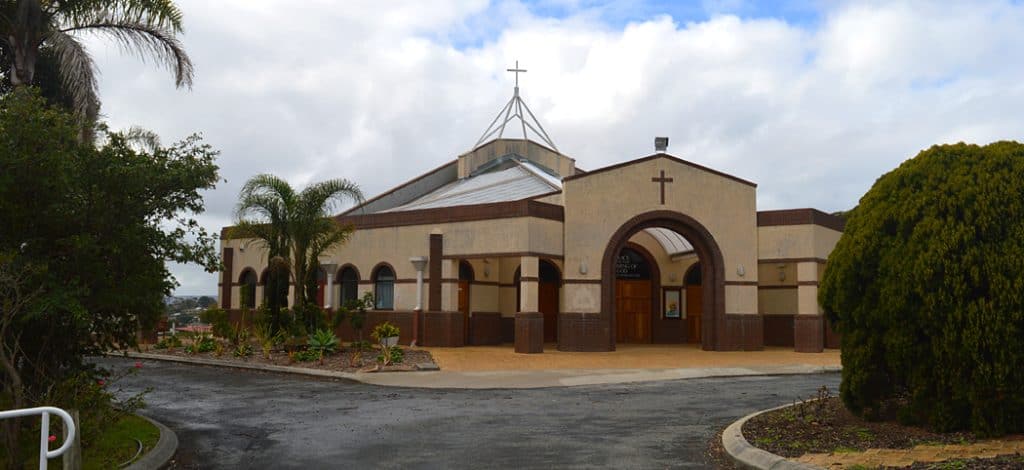
The beginning of Catholicity in Albany begins with the arrival of Lawrence Mooney in 1833. Lawrence was an ex-Irish soldier who climbed to the top of Mt Clarence, every Sunday, to recite the rosary and pray for a priest to be sent to Albany. Lawrence and his family became an inspiration to the Catholic settlers of Albany with their home on Grey Street serving as the community church for years.
Mass Rock
Site of the first celebration of Mass in the settlement of Western Australia in 1838 by the Chaplain of the French Frigate “Heroine”, for the few Catholics in town.
In 1843, Fr John Brady who would later become the Bishop of Western Australia travelled to Albany and celebrated three Masses including one at Pulpit Rock and one in the home of Lawrence Mooney.
Over the next fifteen years, there would be a few priests from overseas who would come and go. It was not until 1859 that an opportunity to establish a parish offered, with the arrival of Fr Griver who was able to remain long enough to start the building of the first Church, the be called “Stella Maris” or “Star of the Sea” which was completed in 1861. The 11m x 8m church was opened in February 1861.
St Joseph’s Church
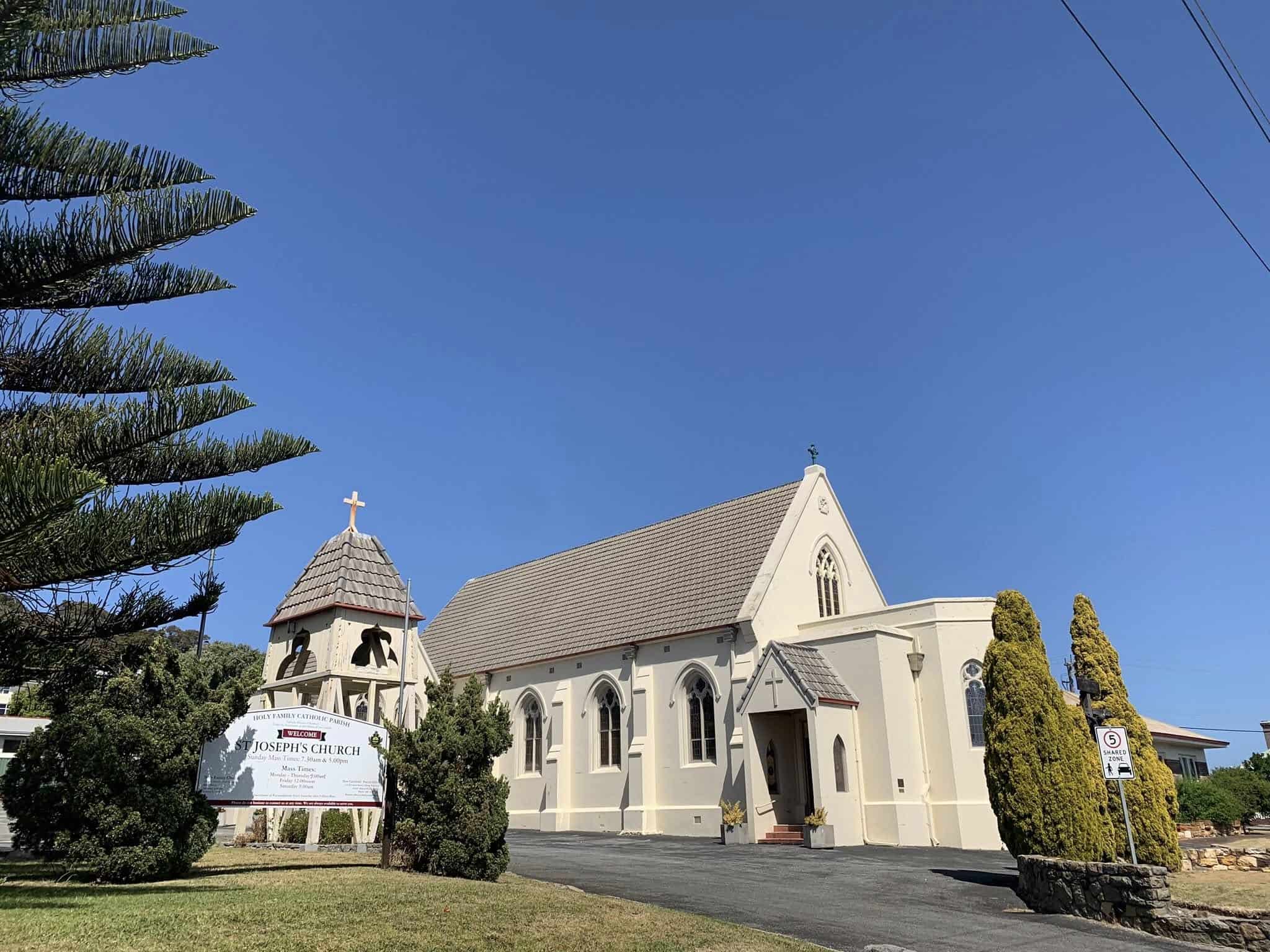
Population growth created the need for a bigger Church. On 28 March 1878, St Joseph’s Church was consecrated by Bishop Griver. Designed initially for 300 people, the Church cost 1,700 pounds ($500,000 Australian dollars in 2025).
Modifications and Additions:
In 1855, Saint Emilie de Vialar (foundress of the Religious Order, the Sisters of St Joseph of the Apparition), sent a group of sisters from Europe to service the needs of the people of Western Australia. In 1878, the sisters moved down south to start a new outpost and school in Albany led by Mother Julia Cabagniol and Sr Margaret Ralston. Their first building project was a two-storey primary school situated beside the original Stella Maris Church and across the road from the current St Joseph’s Church.
St Joseph’s Convent
The construction of St Joseph’s Convent followed, and the sisters moved in on 21 June 1881. St Joseph’s Convent was the first secondary school established in a country area in Western Australia. It was known as St Joseph’s School for Young Ladies and offered a curriculum of ‘higher learning.’
In 1898 the sisters extended the Convent by adding a wing at each end of the building, with a veranda around three sides. In 1966 the sisters left the convent to take up their new residence in the newly opened Ave Maria Convent and secondary/ boarders’ college (now St Joseph’s College). The Convent became a general-purpose centre for the Parish and an office for the sisters. The convent closed in 1976 and in 1978 it was badly damaged by Cyclone Alby, going through an extensive restoration process.
St Pius X College
After the arrival of the sisters of St Joseph who were tending to the educational needs of the girls, the Christian Brothers were asked to open a school for the boys. In 1898 a school was opened in Albany on a site called “Camfield”, but seven years later due to low numbers, they had to leave town. Fifty years later, in 1955, the Brothers came back and built a new school. After St Pius X College amalgamated with Ave Maria College in 1978, these school buildings were converted into housing units for retirees and named St Joseph’s Lodge.
New Camfield
While the brothers’ new school was being built, lessons were held in the building adjacent to the St Joseph’s convent. This was named the “New Camfield”. Once the school was completed, classes began in the main building and New Camfield became the presbytery for the Brothers.
Albany Cemetery
From the Sisters arrival in Albany in 1878 to their departure in 2009, over 100 Sisters of St Joseph of the Apparition spent time serving those in our community. While many returned to their homelands or were buried elsewhere, there are twelve sisters buried here in Albany.
The most honoured of these sisters is Mother superior, Julia Cabaniol.
The logo of the Diocesan Shrine:

Bishop George Kolodziej declared Saint Joseph Church as diocesan shrine. The official and solemn declaration happened last March 19, 2026 attended by 27 OSJ priests together with the Sisters of Saint Joseph and the faithful of Albany and neighboring parishes.

WEEKDAY MASS:
Wednesday Afternoon at 4pm
WEEKEND MASS:
Reconciliation Sunday at 7:30am
Sunday Morning Mass at 8am
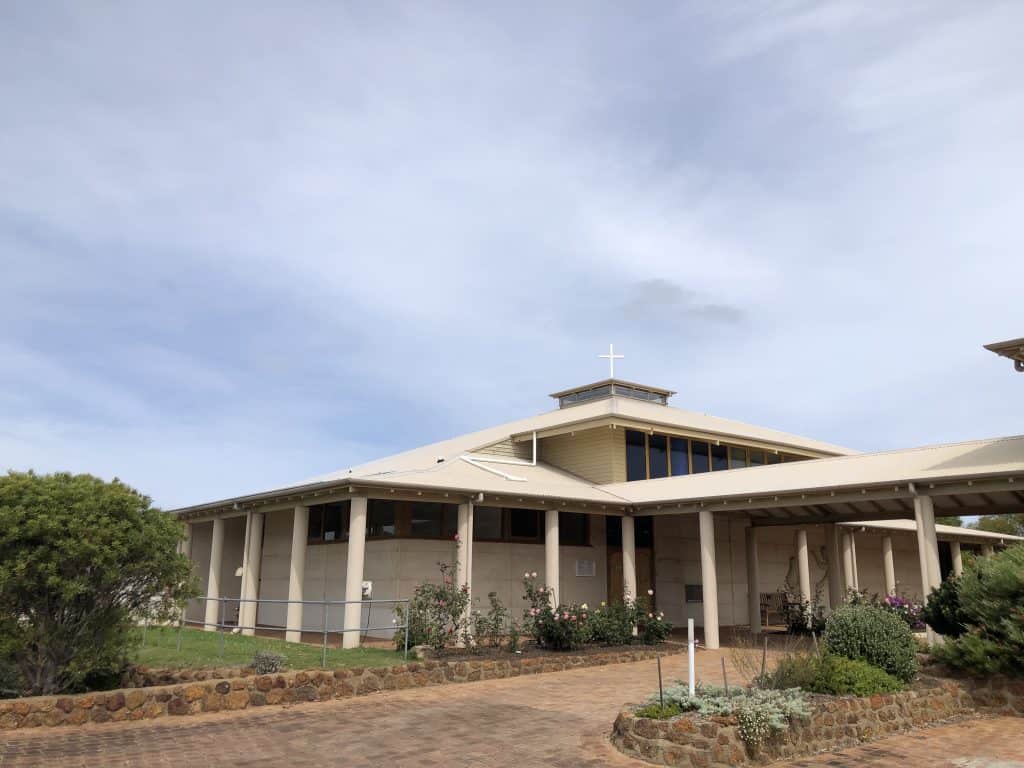
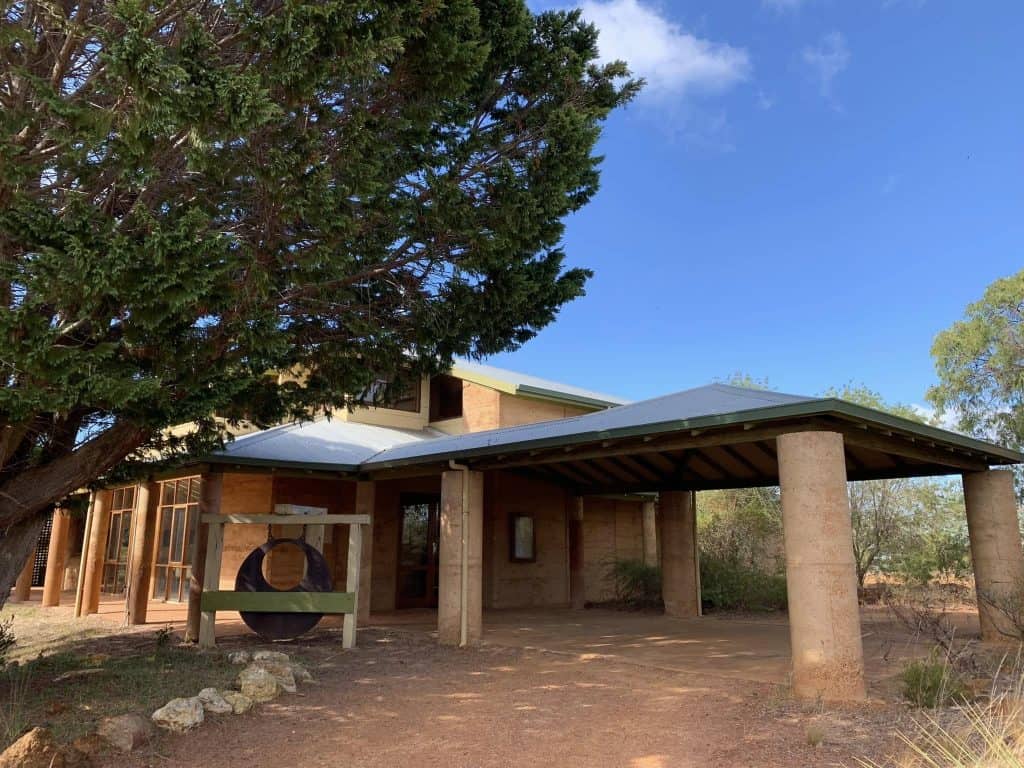
The Augusta–Margaret River Parish was established in 1950, building on Catholic foundations laid by early settler families following the First World War. In Augusta, the first place of worship was a modest timber chapel built in 1954, affectionately known as the “Summer Palace.” The land on which Lumen Christi now stands was gifted to the Church in 1897 by Captain William Ellis and his wife Margaret — a legacy that continues to shape parish life today.
In the mid-1980s, inspired by the success of St Thomas More Church in Margaret River, the parish undertook the construction of a new church in Augusta. Built largely by parishioners and volunteers.
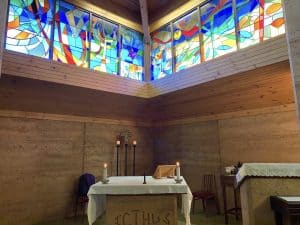
Lumen Christi features innovative stabilised rammed limestone sourced locally and is richly adorned with handcrafted works created and donated by members of the community.
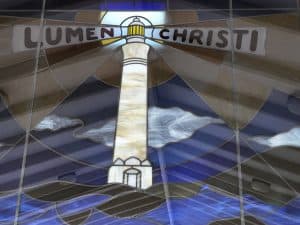
The church was officially opened and dedicated on Australia Day, 26 January 1986. Its name, meaning Light of Christ, reflects both its spiritual purpose and the unity of those who built it.
PARISH PRIEST
Rev. Fr. Joeffrey Arceta, OSJ (Oblates of Saint Joseph)
SUNDAY MASS:
(2ND AND 4TH) – 11:00 AM
RECONCILIATION
By Appointment
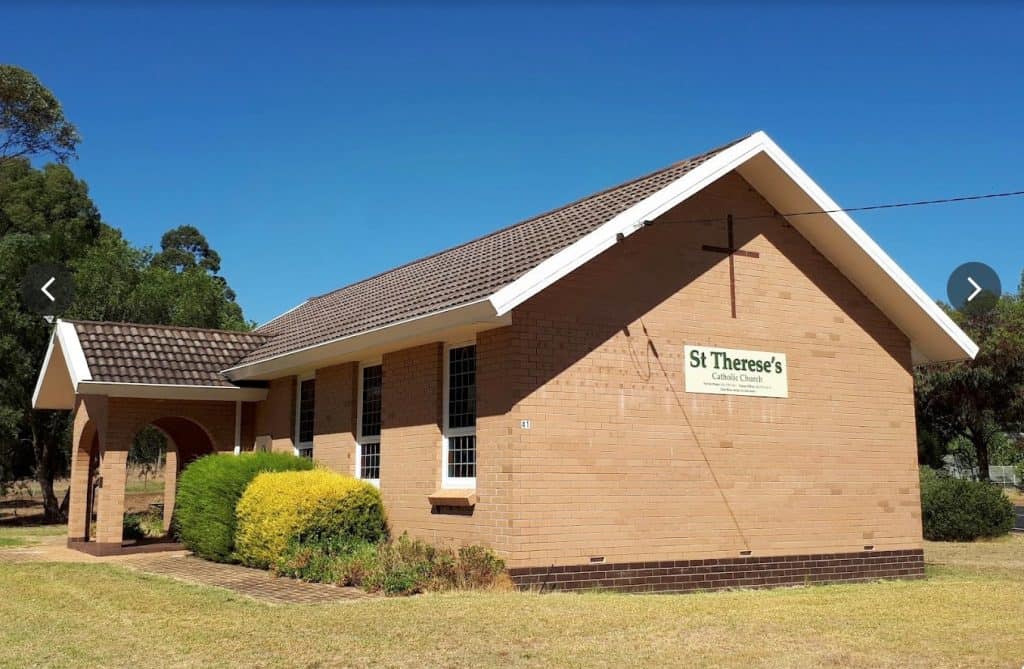
ST THERESE’S, BALINGUP
Balingup is a very’ old and attractive village situated on the South West Highway, about 30 kms north of Bridgetown. The Catholic Church is a prominent landmark on the highway and was constructed in 1979 after Cyclone Albie in 1978 caused great havoc in the south west of WA and blew the original church off its wooden foundations.
Originally Balingup was part of the Nannup Parish and the priest travelled across to celebrate Mass there monthly, fortnightly and then weekly. It was transferred to the care of Bridgetown in 1971. The Motor Mission Sisters provided great service to faith development of the families in the Balingup area over a long period of time.
The communities of Balingup and Greenbushes, who share Sunday Liturgies, have worked over the years to build a spirit of unity. Morning tea after each liturgy has helped to contribute to this. Their efforts to host the Ball and assist with the running of the Small Farm Field Day are notable contributions to the local community.
As in all small towns of the parish, the church of Balingup is a focal point for the local Catholic community.
PARISH PRIEST
Rev. Fr. Edwin Ocho (Bridgetown Parish)
WEEKEND MASS:
2nd and 4th Sunday – 9:00 AM
Reconciliation: By Appointment
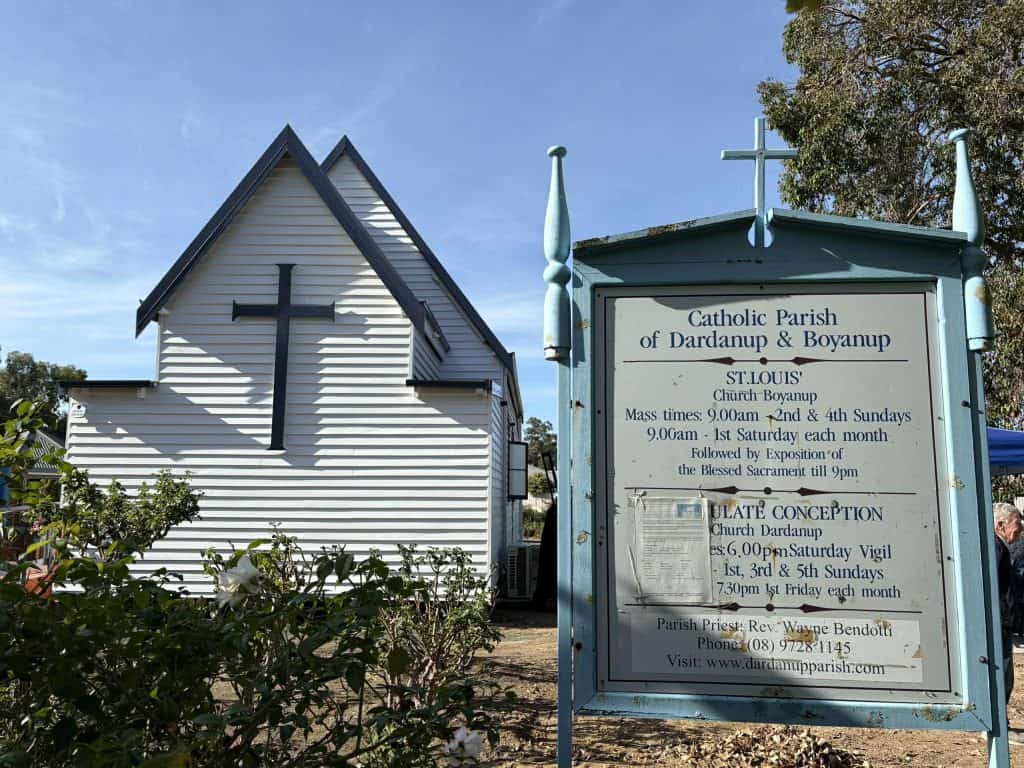
St Louis, Boyanup
St Louis Church was built by the faith, hard work and zealous dedication of a small group of Catholics led by Terence and Bridget Reilly. The church at Dardanup was “too far away” for these Catholic pioneers of the early 1900s. Occasionally a priest would stay overnight with the Reilly family to celebrate Mass in their front room, the altar made of kerosene boxes. This small group of Catholics, kneeling at their humble altar, had one desire — to raise funds for their cause.
Terence trudged the district door-knocking. One generous parishioner gave five pounds, “a fortune in those days”, and for every pound raised Terence and Bridget matched with a pound of their own money. Theirs was a true sacrifice as they had nine children to clothe and feed. The women made cakes and jam and raffled dressed chickens, while their children would sell raffle tickets around the small community
Their efforts were realised when local builders, Alfred Peake and his son Frank, were engaged to build the church. Sawn timber was hauled by horse and dray from the old Argyle Mill between Boyanup and Donnybrook by the Reilly boys and with the willing assistance of those few pioneers the church was built.
St Louis was named by Dean Luigi Martelli who was born in India of European descent. He arrived in Australia in November 1881 and came to the Parish of Bunbury in 1897. Dean Martelli acted as agent for the Sisters of Mercy, buying land for future convents. He insisted the church be built on freehold land with enough space to build a convent, and so the present site was purchased. The land previously gazetted for the Catholic Church on the South West Highway was later sold to local garage owner A.G. Hitchings to expand his business.
St Louis Church was blessed and dedicated on Sunday 9th February 1913 by Dean L. Smyth of Bunbury. He commended the spirit of harmony that existed among members of different denominations in the area, illustrated by the presence of the local Anglican Minister, Rev. Scott- Clarke, at the ceremony He praised Mr Reilly and his devoted band of workers, whose united efforts built the church (WA Catholic Record, 15 February 1913).
For a time in 1908 St Louis was administered from Bunbury. Priests would travel by rail to Boyanup Junction on Saturday evenings and sleep in the sacristy saying first Mass at St Louis. After Mass they would take him by horse and cart to Donnybrook for second Mass. On Monday the priest would return to Bunbury by rail.
Archbishop Prendiville, visiting Boyanup after the blessing and dedication of the Immaculate Conception Church in Dardanup in May 1938, was horrified at the condition of St Louis and ordered the church to be lined and sealed. In his opinion “it wasn’t fit to say Mass in”. The upgrading was completed by 1940.
In July 1968 the small porch replaced and a new altar was built to enable the celebrant to face the congregation. The confessional was also built at this time. In May 1990 the outside stumps were renewed and the confessional removed to provide extra seating. A new altar, tabernacle and side-shelving, designed and made by Michael Rubie, were installed. The floor of the church, prior to the present carpet being laid, was of polished boards.
Very few alterations have been made. Today the church is structurally the same as when that small band of Catholic pioneers witnessed the blessing and dedication of St Louis Church in 1913.
Re-opened on April 26, 2026. The renovation to this heritage church building was undertaken by Heritage builder Roger Meneze. A special St. Louis committee was formed with eight parishioners working together to complete this project over the last two years. Finance was raised from Stare Heritage Council with a donation of $50,000. Thanks be to God the remaining funds raised by parishioners.
PARISH ADMINISTRATOR
Rev. Fr. Victor Lobo
Sunday Masses:
Sat (Vigil) – 6:00pm
Sun – 8:00am, 10:00am, 6:00pm
Weekday Masses:
Monday to Friday – 7:00am
Saturday – 8:00am
Reconciliation:
Saturday – 5:00pm
11 Money Street BUNBURY WA 6230
PH: +61 8 1234 5678
WEB:
The parish and school are so closely linked over the years the history must be told together. Boyup Brook was a part of Bridgetown Parish for many years. It is not on record when the priest first came to Boyup Brook although the first priest came to Bridgetown in 1900. One parishioner remembers walking with her then fiancé from his mother’s farm on Brown Seymour Road to Bridgetown-Boyup Brook Road, to hitch a ride with the priest into town where he said Mass in the building that is now the Tourist Bureau and was then the Town Hall. Several parishioners remember going to Mass at the Town Hall on the corner of Cowley and Abel Streets which was opening in 1936 and has since been extended and renovated in the eighties. The front of the Hall was the Shire Offices and this is where the priest heard confessions and the altar was set up in front of the stage.
In the middle fifties, work started towards a church and school in Boyup; Bernie Rownet was contracted to build three rooms — two for classrooms and one for the original church. A great community spirit allowed the venture to come into fruition. Tim Ducey cleared all the big trees and the rubble with a D4, and Tom Kinsella did all the electrical wiring for no pay. It was all bush to begin with, with no Knapp Street at all. An Italian, named Nick, was building a house in Robinson Avenue for his bride who did not immigrate so Jim Thompson and Pat Glynn negotiated to buy the house as a presbytery (which is now used as a school house).
The Presentation Sisters came in 1956; Sr Michael and Sr Assumpta being the original Sisters here. A lot of history of this period comes from Sr Michael. The nuns lived with the Gutheries on the corner of Robinson Avenue and Inglis Street.
The school started in July 1956 with 70 children and 50 desks — the desks had to be borrowed from Bridgetown. The nuns moved into the convent on 11th February 1957. The Presentation Sisters were part of our parish until 1989. The whole community benefited by their presence in Boyup Brook. They taught music from dawn to dusk, in between all their school teaching, and much community pastoral care was given. The music lessons were mainly in the earlier years until the early 70’s. The school continues to function with lay teachers. It caters for four year to Year 7 students. It has been under review for its viability and we have just received the good news from Bishop Quinn and the Catholic Education Office that it will continue into the future.
PARISH PRIEST
Rev. Fr. Edwin Ocho
WEEKEND MASS:
1st, 3rd, and 5th Saturday (Vigil Mass) – 5:00 PM
2nd and 4th Sunday – 9:00 AM
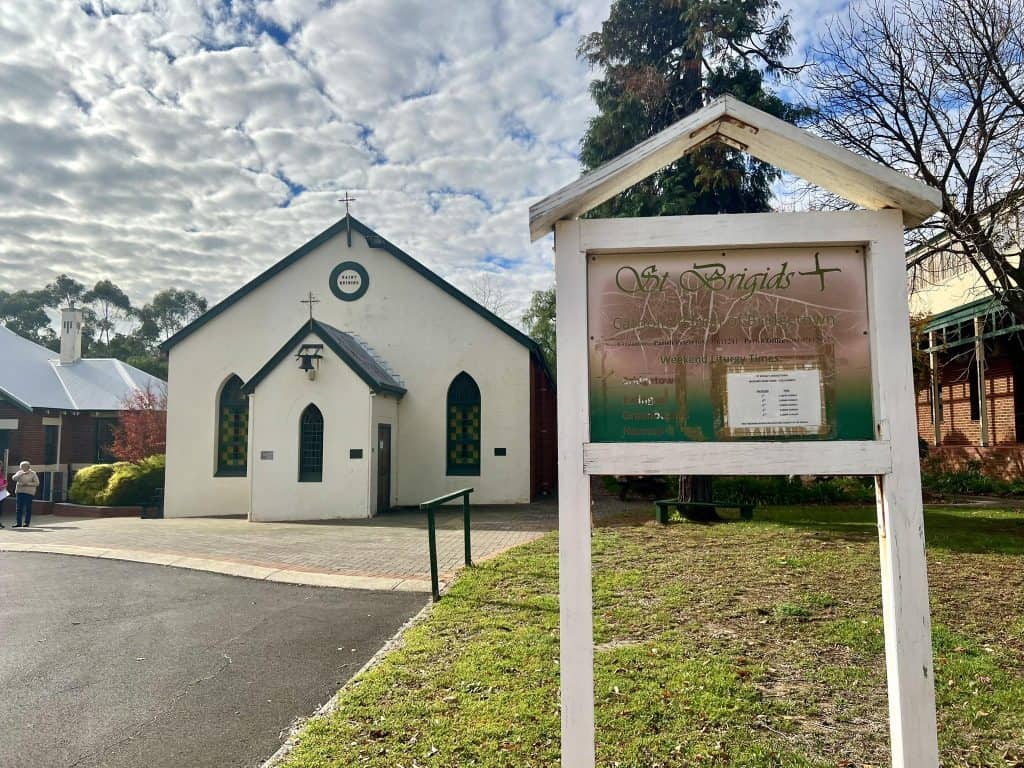
St Brigid’s Parish (Bridgetown—Greenbushes—Balingup—Nannup)
Vision:
St Brigid’s Parish is established to bring us together as a Catholic Faith Community. We will provide support for all our members through liturgy/worship/education, especially religious education/service/social events and the simple enjoyment of each other.
As a Parish, we seek to live out the belief that as a community of worship, of shared faith and service, we can share with others in the wider community the gifts and talents received from God.
Mission:
The dedication of our Parish to the Holy Spirit calls us to be particularly at-attentive to the inspiration and guidance of the Spirit:
As we:
A Short History
Before the forming of the Catholic parish and school in 1894, there was no resident priest. Two Redemptorist priests, Fathers Treacy and Leciale from the neighbouring district of Bunbury, visited regularly to give religious services for the Catholics of Bridgetown.
The first church was built at the corner of Roe and Steere Streets. This building, also, served as a school. It was a little wooden shack, a one-room timber construction with a tin roof. There was only one teacher taking care of all students.
The first marriage was performed in 1901 by Father Leciale, when P. McAlinden and J. Toole were wed.
In 1903, a stone church was erected on the site. It was built in the Federation Free Style of local handmade bricks. The bricks were made from the clay dug up from the now named Somme Creek, which runs along the back of the church grounds, and fired on site.
In 1903, the parish was officially established under the patronage of St Brigid of Ireland. Father Griffin was the first parish priest. He saw the establishment of the church, which was opened in 1904, by Matthew Gibney, the Bishop of Perth.
In the same year, the same Bishop asked a group of Sisters of Mercy to minister to the educational needs of Bridgetown children. The Catholic School’s oval was then at the Bridgetown Show grounds from 1895 to 1903. In 1903, the Catholic faithful bought the land and transformed it into the school’s own sporting oval.
In 1904 the convent was built first as a single storey boarding house for Catholic students from the surrounding areas. Later, the convent had a second floor added. It was ten used to teach music and perform religious instructions. The convent was also used as a haven during the Second World War to house orphans from those coastal towns coming under enemy fire.
The parish (ca.1904) included the towns of Manjimup, Nannup, Greenbushes, Donnybrook and Boyup Brook. As the districts grew, the parishes of Manjimup and Donnybrook were cut off. In 1952, Nannup became a separate parish and in 1960, Boyup Brook.
The discovery of tin in Greenbushes in 1886 caused the developing town to outstrip Bridgetown’s population and it was made a separate parish from 1905 until 1915, when it became a part of the Bridgetown parish again.
The 120th anniversary of the parish was celebrated on Sunday, the 4th of February 2024, followed by an Irish-themed supper.
PARISH PRIEST
Rev. Fr. Edwin Ocho
Sunday Masses:
Sat (Vigil) – 6:00pm
Sun – 8:00am, 10:00am, 6:00pm
Weekday Masses:
Monday to Friday – 7:00am
Saturday – 8:00am
Reconciliation:
Saturday – 5:00pm
11 Money Street BUNBURY WA 6230
PH: +61 8 1234 5678
WEB:
PARISH PRIEST
Rev. Fr. Marlon Chingwangco
Sunday Masses:
1st, 3rd and 5th Sunday – 10:30 AM
2nd and 4th – 8:30
Weekday Masses:
Wednesday and Friday 9:00 AM
Reconciliation:
By appointment
Named after the Duke of Brunswick, a Prussian General killed at the Campaign at Jena in 1806. The first Mass was not celebrated at Brunswick until the year 1909, however, the history of the church in the district dates back to 1896 with the arrival at Roelands of the late Mr James Devlin.
The Ferry family arrived at Roelands shortly afterwards, followed by the Shine and Rafferty families in 1899. Mrs Ferry soon set about raising money from the few families and a number of Irishmen working at the local quarry. They soon built a small iron and timber church at Roelands in about 1901. In those days, Fr Martelli travelled from Bunbury to say Mass once every four months. Roelands later became part of the Collie Parish.
When some of the Catholic families moved to Brunswick and more families settled in the district, it was decided to move the church to land in Brunswick (near where the present church stands today). Mr Devlin had collected money to buy this land. The first Mass was offered toward the end of September 1909. Fr Gilroy was the first parish priest.
In 1914 a start was made to raise money for the present church and in 1915 Brunswick was then included in the Yarloop parish. In 1918 the present church was built. The official blessing and opening was held on 12th February 1922 with Archbishop Clune officiating.
There were several changes over the years and Brunswick was part of the Dardanup/Harvey/ Brunswick parish from 1928 to 1939.
In the mid to late 1930s a number of Italian migrants arrived in the area and over the next decade there was quite a large population of Italian people in the parish. It was due to these people that the annual Fiesta to celebrate Our Lady’s Assumption became so well known.
After the second world war, a number of Polish families arrived in the town and also contributed to make our parish a very successful one.
The year 1951 was the arrival of Presentation Sisters and in February 1952 the first Catholic school (originally erected as a cheese factory) was opened in Brunswick.
1995 saw the final year of the Presentation Sisters as teachers in our school. We are most grateful for the care and attention they gave to several generations of our students.
For a number of years, we were without a Parish Priest and we, the parishioners, have attended to the daily work of the parish ourselves. Since 1994, when we began to share a priest with Harvey.
PARISH PRIEST
Rev. Fr. Marcelo Rosales, MSP (Residing at Harvey Presbytery)
Rev. Fr. Terence Patrick “Pat” Rooney (Resident Priest – Retired)
Holy Mass
Tuesday 9.00am
Wednesday 9.00am
Thursday 5.00pm
Friday 12.00pm
Saturday Anticipated 6.00pm
Reconciliation (Confession)
Friday 11.30am
Saturday 5.00pm
Please approach or phone the priest who is also available outside of these hours.
Short Parish History
St Joseph’s Catholic Parish of Busselton is one of the oldest parishes in Western Australia. Priests from Perth, especially members of the Benedictine Order, visited Vasse (as Busselton was called) from the 1830’s onwards, enabling the few Catholic families to hear Mass and receive the Sacraments.

The year 1998 marked the 150 years of Catholic life in Busselton. From Bishop’s Salvado’s list of 73 Catholics in 1854, there are now a great number of Catholic families living in the area. The past has been fruitful and we are certain that the future will even be better. With St Joseph as our patron saint, guiding and protecting us, the hope is that this parish will continue to prosper through God’s providence and love.
PARISH PRIEST
Rev. Fr. Jess Navarra
Associate Priest
Rev. Fr. Jayan Johnson, HGN
Deacon
Rev Deacon Barry Cruickshank
Parish Vision Statement:
GROWING IN FAITH, INCLUSIVITY AND OUTREACH THROUGH OPENNESS
Parish Mission Statement:
To be a welcoming and loving community, journeying together, proclaiming the Gospel of Jesus Christ through words and deeds, nourished by the Holy Eucharist, discipleship is formed for the service of all.
Sunday Masses:
9: 00 AM & 6:00 PM
Reconciliation:
Sunday 8: 30 AM & 5:00 PM
Short Parish History
St Joseph’s Catholic Parish of Busselton is one of the oldest parishes in Western Australia. Priests from Perth, especially members of the Benedictine Order, visited Vasse (as Busselton was called) from the 1830’s onwards, enabling the few Catholic families to hear Mass and receive the Sacraments.

The year 1998 marked the 150 years of Catholic life in Busselton. From Bishop’s Salvado’s list of 73 Catholics in 1854, there are now a great number of Catholic families living in the area. The past has been fruitful and we are certain that the future will even be better. With St Joseph as our patron saint, guiding and protecting us, the hope is that this parish will continue to prosper through God’s providence and love.
PARISH PRIEST
Rev. Fr. Jess Navarra
Associate Priest
Rev. Fr. Jayan Johnson, HGN
Deacon
Rev Deacon Barry Cruickshank