ABOUT US

Mission & Vision

The mission of our Diocese, in the words of Jesus, is:
>>> to bring good news to the poor… 
>>> liberty to captives…
>>> sight to the blind…
>>> freedom to those oppressed

These words are to be understood at two levels.  The first is the obvious level.

However, they are to be understood also in the context of Jesus’ preaching of the kingdom of God which is dependent upon a personal relationship with him.  It includes the means he gave his Church to free the spiritually poor, blind and those lacking inner freedom such as Sacraments and Prayer.

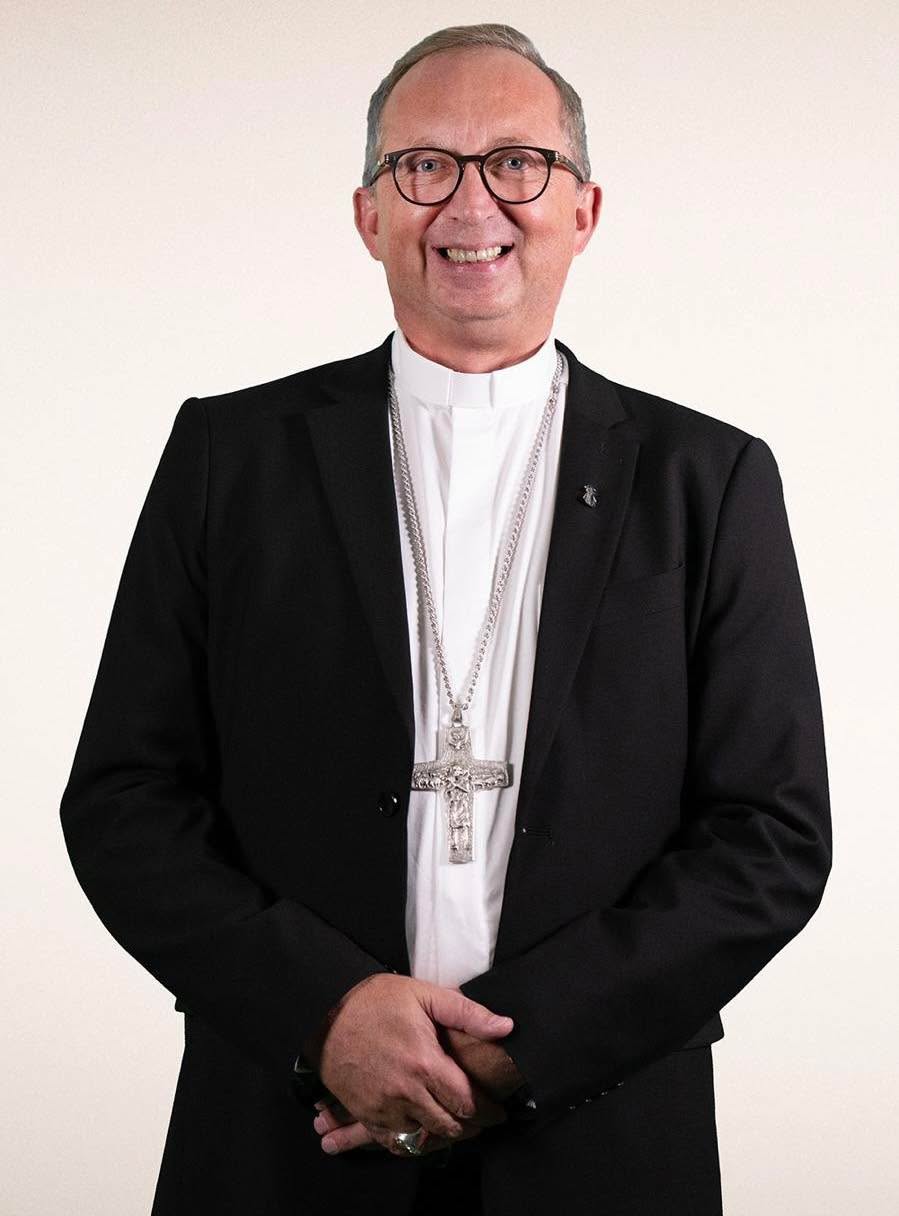
Bishop George

George (Jerzy) Kołodziej (born 17 May 1968) is a Bishop of the Roman Catholic Diocese of Bunbury.

Bp Kołodziej was born in Dobra, Poland, part of the Diocese of Tarnów, renowned as the most religious diocese in Poland. In 1987, at the age of 19, he entered the Society of the Divine Savior, known as the Salvatorians. He took perpetual vows in 1992. On 28 May 1994, he was ordained a priest for the Society of the Divine Savior, by Cardinal Franciszek Antoni Macharski at the Our Lady of Fatima Shrine in Trzebinia.

Following his ordination, Kołodziej was sent to Western Australia by his order. He served in the parish of Greenmount initially, before being appointed chaplain of Chisholm Catholic College, Perth. He was elected vice-superior of the Salvatorian Region of Australia in 1999.

He moved to New South Wales in 2001, to serve in the Diocese of Broken Bay. He served as chaplain of St Leo’s Catholic College, Waitara while serving as assistant priest in Pymble and East Gosford. He was appointed parish priest of Pittwater in 2008 and served there for 10 years until he was elected superior of the Salvatorians in Australian in 2018.

On 6 January 2025, he was appointed Bishop of the Diocese of Bunbury by Pope Francis. The diocese had been without a bishop for 18 months following the resignation of Bishop Gerard Holohan on 30 June 2023. His episcopal ordination took place in St Patrick’s Cathedral, Bunbury on 19 March 2025.

Gaudete in Domino Semper

A bishop's coat of arms is distinguished by a sign of his rank. That sign, placed over the shield, is a particular version of an ecclesiastical hat that was worn in processions, as late as 1870. The hat is low-crowned, flat, and widebrimmed. On a bishop's coat of arms, the hat is green and hanging from it are 12 green tassels, six on each side.
There's also a processional cross above the shield. The cross on a bishop's coat of arms has one bar; an archbishop's cross has two. The design of the shield itself differs from bishop to bishop.
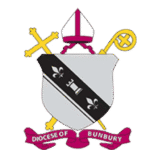
Bishop George Kolodziej SDS’ crest projects the simple life of a religious. With this mind, the overall design is graphic, clean, modern and simple. The bishop’s simple stylised Galero with cords, and tiered stylised tassels flanking the shield. These ‘tassels’ were designed with a little ‘movement’ to be more inviting, in this new ministry and in the lives of all whom he has encountered in his thirty years of priestly ministry. The simple gold cross is placed vertically behind the shield. The gold used has a hint of red, depicting the red earth of Australia, especially in Western Australia.

The shield is composed of a design with a blue background bordered by the red gold. The prominant colour blue is a reminder of the bishop’s devotion to the Blessed Virgin Mary. Blue also depicts the sky and the sea, where Bunbury seats close to. The Bunbury lighthouse is a striking landmark. It stands some 25 metres above the ground and its light is visible from 27 kilometres away. Just as the lighthouse guides the ships safely into the harbour, this diocese will continue to guide and radiate light and hope.

On the shield are the stars forming the Southern Cross which represents Australia, and is coincidently symbolic of the wounds of Christ. On the top left of the shield is an open Bible, the Word of God. We must share the joy of the Gospel and live the Word of God. In Polish, Kolodziej, is an occupational surname derived from the occupation of kotodziej (“wheelwright). The wheel thereby evoke Bishop George Kolodziej SDS’ family, birthplace, his ministry and his personal devotion. The motto chosen by Bishop Kolodziej SDS appears on a scroll below the shield. “Gaudete in Domino semper” -“Rejoice in the Lord always” which is taken from Philipians 4:4.

Clergy & Religious

The Canon Law of the Catholic Church addresses the clergy and religious in various ways, reflecting their roles and responsibilities within the Church. Here are some key points:
Ordained Clergy: Clerics are bound by the same legal obligations as laity, including the obligation to maintain communion with the Church community. They also have additional legal obligations when they receive holy orders, such as obedience to their bishop and, in the Church, a commitment to celibacy. Consecrated Life: Members of consecrated life, such as monks and nuns, have specific rules and privileges that govern their religious vows and duties. Hierarchy and Authority: The Church's hierarchy is structured with distinct levels of administration, with the Pope holding supreme authority and the College of Bishops acting in union with the Pope. Equality in Dignity: All baptized members, including clergy and religious, share a genuine equality in dignity and purpose, regardless of their specific roles within the Church. Canon Law is a comprehensive legal system that governs the activities of the Catholic Church and its members, ensuring that all are held to the same standards of conduct and discipline. It is a living guide that helps the faithful live their faith in an orderly way and in communion with the whole Church.

  • Past Bishops

Very Rev Pierangelo Repuyan, PhD, VG

Vicar General, Episcopal Council, Consultor, Council of Priest Dean of the Cathedral of Saint Patrick - Bunbury, Synodal Team, Lay Ministries Ongoing Formation, Marriage Office

Rev Fr Tony Chiera

Episcopal Vicar for the Clergy, Episcopal Council, Consultor, Council of Priests, Synodal Team, Lay Ministries Ongoing Formation

Rev Fr Jess Navarra

Consultor, Council of Priests, Parish Priest of Saint Joseph Parish and Our Lady of the Bay Church, Busselton.

Rev Fr Robert Romano

Consultor, Parish Priest of Pinjarra (Saint Augustine Church), Boddington (Saint Joseph Church), Dwellingup (Saint Patrick Church)

Rev Fr Christian Saminal, OSJ

Consultor, Council of Priests, Parish Priest of Saint Damien Parish, Dawesville, Clergy Life and Mission

Rev Fr Vincent Comple, OSJ

Consultor, Council of Priests, Parish Priest of Holy Family Parish (Albany), Saint John Marie Vianney Chuch (Gnowangerup), Holy Cross Church (Bremer Bay), Saint Joseph Church (Ongerup) and Rector of the Diocesan Shrine of Saint Joseph, Albany

Rev Fr Roshan Fernandez

Council of Priests, Parish Priest of Christ the Living Vine Parish, Leschenault, Australind m

Rev Fr Roberto Archie Carampatan

Council of Priests, Parish Priest of Our Lady of the Souther Cross Parish, Dunsborough, Synodal Team, Lay Ministries Ongoing Formation, Clergy Life and Mission

Rev Fr Marlon Chingwangco

Council of Priests, Parish Priest of Saint Patrick Parish (Katanning), Our Lady of Fatime (Broomehill), Saint Bernand (Kojonup), Saint Michael (Tambellup)

Rev Fr Victor Lobo

Council of Priests, Administrator of Immaculate Conception Parish (Dardanup) and Saint Louis Church (Boyunup), Synodal Team

Rev Fr Edwin Ocho

Parish Priest of Saint Brigid Parish (Bridgetown), Saint Mary's Church (Boyup Brook), Saint Patrick's Church (Greenbushes), Saint Therese Church (Balingup), Saint Thomas More Church (Nannup), Clergy Life and Mission

Rev. Marcelo Rosales, MSP

Parish Priest of Immaculate Conception Parish (Harvey) and Our Lady of Assumption Church (Brunswick)

Rev Fr Gerald Tan

Administrator of Saint Brigid Parish (Collie) and Saint Mary's Church (Darkan)

Rev Fr Wayne Bendotti

Parish Priest of Our Lady of Assumption Parish (Donnybrook), Holy Family Church (Kirup), Saint Jospeh Church (Capel)

Rev Fr Edcel Silva, OSJ

Administrator of Saint Mary's Parish (Denmark), Sacred Heart Parish (Mount Barker), Saint Francis of Assisi Church (Walpole), Saint Anne Church (Cranbrook), Saint Mary Margaret Church (Frankland)

Rev Fr Matthew Moolamthuruthil, HGN

Parish Priest of Maria Regina Parish (Lake Grace), Saint Peter the Fisherman Church (Hopetoun), Saint Thomas Becket Church (Kukerin)

Rev Fr Antony (Albin) Odippattil Sebastian, OCD

Administrator of Our Lady of Assumption Parish, Mandurah

Rev Fr Joseph Sousa

Parish Priest of Saint Joseph Parish (Manjimup), Sacred Heart Church (Pemberton) and Saint Francis Xavier Church (Northcliffe)

Rev Fr Joeffrey Arceta, OSJ

Parish Priest of Saint Thomas More Parish (Margaret River) and Lumen Christi Church (Augusta), Diocesan Vocation Ministry

Rev Fr Joe Anson, MST

Parish Priest of Saint Matthew Parish (Narrogin), Saint Joseph Church (Wagin), and Saint John the Baptist Church (Dumbleyung)

Rev Fr Abraham Chukwu

Administrator of Saint Patrick Parish (Waroona - Yarloop)

Rev Fr Marek (Mark) Paczka, SDS

Administrator of Our Lady of the Sea Parish (Esperance), Good Shepherd Church (Condingup), and Our Lady of the Way Church (Esperance-Coolgardie Hwy)

Rev Fr Joel Villanueva, OSJ

Diocesan Media and Communication Officer, Assistant Priest at Saint Patrick Cathedral Parish, Bunbury, Lay Ministries Ongoing Formation

Rev Fr Marvin Gomez, OSJ

Chaplain of Saint Joseph College, Albany and Assistant Priest at Holy Family Parish, Albany

Rev Fr Nathan Barrie, EKHS

Assistant Pariest at Saint Patrick Cathedral Parish, Bunbury, Lay Ministries Ongoing Formation

Rev Fr Jijo Rockey, OCD

Assistant Priest at Our Lady of Assumption Parish, Mandurah

Rev Fr Bony Rebera, OCD

Assistant Priest at Our Lady of Assumption Parish, Mandurah

Rev Fr Hugh Galloway

Retired Priest

Rev Fr Ian Johnson

Retired Priest

Rev Fr Wally Kevis

Retired Priest

Rev Fr Terrence Patrick (Pat) Rooney

Retired Priest

Rev Fr Ignatius Thambuswamy

Retired Priest

Rev Fr Leon Russel

Retired Priest

Rev Deacon Manuel Navalta

ALBANY

Rev Deacon Barry Cruickshank

BUSSELTON

Rev Deacon Michael Philips

MANDURAH

Rev Deacon Dennis Conlan

RETIRED

Rev Deacon Greg Dudley

RETIRED

Rev Deacon Gerard Lanigan

RETIRED

Rev Deacon Ron Webb

RETIRED

The facade of the chapel of Carmel of Our Lady of Lourdes, Gelorup Rise

Our Monastery

Bunbury is a city in the southwest of Western Australia. The diocese takes in all the lower portion of the state. The monastery is under the jurisdiction of the Australian Regional Vicariate of the Anglo-Irish Province.   Our Lady of Lourdes is the titular of the monastery.  There were ten Foundresses.  The founding Prioress is Mother Anne of Jesus (Vil) from Bangkok Carmel.   The foundresses took up residence in their new Carmel on July 22nd 1977, and Bishop Myles McKeon celebrated the first Mass the next day 23rd July 1977.

Due to certain circumstances, the Chapel was not ready until the day of the Official inauguration and Enclosure, 13th November 1977, at which time the Blessed Sacrament was reserved. From the time they were officially established, our sisters observed the Rule, Constitutions and Declarations given in April 1977.  The Community’s first house, a former Mercy Convent, was in Ferguson Road, Dardanup. Our sisters soon had many friends and benefactors in the area, but the house was situated next to a school and not suitable for a Carmelite monastery, so another location was sought for to build a permanent Monastery. The site chosen was in Gelorup, 13km from Bunbury, still virgin bush just being developed.  A two-hectare lot on Gelorup Rise was bought and donated by the Bishop.              

Bishop Peter Quinn who had succeeded to the Diocese of Bunbury on 4th August 1982 was instrumental in this matter. The foundation stone was blessed by him on the 18th September 1983 and on completion of the buildings, on the 25th March 1984 he con-celebrated the first mass with by then retired Bishop McKeon on the occasion of the official opening and inauguration. This was in the presence of many friends and benefactors. The Bishop pointed out that the building of this Carmel fulfilled a wish, being his first major work as Bishop of Bunbury.   On the same day, in harmony with the wishes of our Holy Father, Pope John Paul II, he consecrated the whole diocese to the Immaculate Heart of Mary.   The style of the Monastery is original, our sisters and the Bishop worked with the Architect, Mrs Iris Rossen, to produce a monastery that is small and laid out in a way that promotes solitude and silence, while witnessing to poverty. The external part of the Monastery, including the chapel, is built in the style of the old colonial rural homesteads.

On 4th November 2001, our sisters celebrated their Silver Jubilee of their foundation in Australia.  The Mass was celebrated by Bishop Gerard Holohan.   Among those present for the celebration were many individuals – clergy, religious and lay – who had helped the nuns establish themselves and then continued the association in many different ways over the years.

The Carmel of Our Lady of Lourdes, Gelorup (in the Diocese of Bunbury) is the second monastery of the Discalced Carmelite Order in Western Australia.  The first is the Carmel of the Holy Trinity, Nedlands, in the metropolitan city, Perth.
 

In the early 1960’s, the Carmel of Bangkok, Thailand, was making preparations for a new foundation. The Archbishop of Thare, in Northeast Thailand, Michael Kien wanted a Carmel in his diocese. In 1973 permission for a foundation fund had come from Rome and all was ready. However, due to the troubled political situation, Thare being close to the Laotian border—the Archbishop decided that it was not safe to make the foundation and it was postponed indefinitely.

By Divine Providence, in 1974, Bishop Myles McKeon of Bunbury visited the Carmel of Bangkok, Thailand.  There were 31 in the community and many young girls wanting to enter. The Bishop had already had a desire to have a Carmelite Monastery in  his diocese and invited them to make a foundation but the reaction of the nuns was that it was out of the question.   In October of 1975 the Bishop wrote, repeating his invitation and this time it was taken up seriously.  The Carmel of Bangkok had been saving funds and goods for many years for the proposed foundation of Thare, and now they devoted everything to the foundation of Bunbury. They took great care that the sisters were well equipped to start off with.

The Bishop of Bunbury offered the nuns a former Mercy Convent, which was vacant, as a temporary home.   This was situated in Dardanup, a small farming  centre, 12km from the city of Bunbury.  The ten foundresses left Bangkok by plane on November 4th, 1976, arriving at Perth airport early in the morning of the 5th November 1976, where Bishop McKeon and friends met them.   From there they were taken to the Carmel of Nedlands (Perth) with which the Carmel of Bangkok had had close ties for long years.  Some years before six sisters (two of whom were among the foundresses) had stayed there to learn English.

The Foundresses remained there for eight months while the new monastery was being renovated; they spent the time learning something of their new homeland and for some, learning English. They made several trips to Dardanup to see how the work on their monastery was progressing and to meet the people.  This interval was of great benefit to the nuns.                          

Our Life

The Rule of Carmel is short and simple, biblically based and centred on Christ. Its spirit is that of the desert: silence, solitude, simplicity and unceasing prayer.  It was originally written for a group of hermits of Mt. Carmel in Israel, between 1206 and 1214.  Since then it has inspired Carmelites to a way of life in which one is free to ponder the word of the Lord and to grow in union with him.  St. Teresa of Jesus founded her first Convent, St. Joseph’s in her hometown of Avila in 1562.  Her vision and spirit created a new family in Carmel where in joyful love her followers could grow in friendship with Christ and be wholly dedicated to the Mission of the Church.  Since then the Teresian Carmelites have been contemplative at the heart of the Church.  United with St. Teresa in her lifetime, St. John of the Cross, gives us with her the spiritual foundation of our family in the Church.  Carmel has been blessed with many great spiritual guides and Saints including St. Therese of Lisieux, Blessed Elizabeth of the Trinity and Edith Stein, who show the power of the Teresian spirit up to our own day. 

The life of Carmel is a balanced Christian and human life.  As known for its joyful laughter as for its profound silence.  St. Teresa wanted her communities to be joyful because Christ is present in his family gathered together in love.  There is time each day for the sisters to have recreation together.   Prayer is central to the identity of a Carmelite, whose life is witnesses to what prayer really means.  For St. Teresa, prayer is a love and growing relationship with Christ.  To create a spirit of prayer throughout the day silence is generally observed.  It provides opportunities for coming into frequent contact with God.   Silence, solitary prayer is essential whole meaning of Carmelite life.  As it was said by Pope Leo XIII, The Spirit of Prayer – to attain this end – three things are necessary:  Silence, Retirement, Mortification without them no prayer and without prayer, Carmel is nothing more.

The Blessed Virgin Mary is the ideal of our life in Carmel by following her who both kept the word of God in her heart and worked for him.  We, Carmelite follow her footstep in serving God.   Mary’s presence among us as we are her daughters and sisters pervades our entire Carmelite vocation.  It imparts a special Marian tone to our contemplation, sisterhood, evangelical self-denial, and apostolic spirit.

The community daily renews its life and vocation by celebrating the Eucharist, proclaiming the word and singing the praises of God.  The praise and gratitude, the remembrance of the mysteries of salvation and the pre-taste of the heavenly meal celebrated in the Mass are extended through the day by the Divine Office.  Each Carmelite community supports itself by its own work.  The offices and duties that are necessary for life together are also shared, so that sisters work in the sacristy, kitchen, laundry and garden. 

Priority is therefore given in the community timetable as well as to personal silent prayer such as Eucharistic Liturgy, Liturgy of the hours in common, two hours of personal prayer, Spiritual reading and community works, etc.

Our sisters are enclosed and follow the directives of the Holy See regarding the separation from the world.  The purpose of enclosure is that the sisters might be free from distraction and anxiety so they can give themselves totally to the Lord.  Their way of life is a hidden one of prayer and self-giving.  Those, the Lord calls to Carmel know the blessings of his peace and the freedom He alone gives.

Carmelite Monastery
66 Gelorup Rise
Gelorup WA 6230
Phone: +61 (08) 9795 7807
Email: prioressgelorup@gmail.com

Our Congregation was founded in Penola, South Australia on 19 March 1866 – the feast day of St Joseph – by an Australian woman Mary MacKillop and an English priest Julian Tenison Woods. 

From the beginning Mary and Julian encouraged Sisters to share the lives and the concerns of people with whom we minister, so that God’s presence in the everyday might be known and encountered. 

We were different from other religious congregations living in Australia during the late nineteenth century. The Sisters lived in small groups of two or three in country areas often where there was no established Catholic Church structure. They enabled children and people in need, through education and spiritual guidance, to know and love God. 

Held in God’s hospitable heart we draw strength to respond to places of violence, fear and insecurity in our world, the places of incompleteness and limitation in ourselves and in the spirit of our Founders we continue to meet the needs of our time. We are a Congregation of women who live with feet on the ground, nurturing life. 

Today, Sisters are engaged in pastoral work as well as in professional roles which include teaching, spiritual direction, administration, social services, law, psychology, nursing, aged care, community development, adult education and support for new arrivals in Australia and Aotearoa New Zealand. 

The Josephite charism is shared by all who live the Gospel with a Josephite heart. 

The facade of the chapel of Carmel of Our Lady of Lourdes, Gelorup Rise

PBVM – Western Australia

Western Australia witnessed the establishment of the Presentation Sisters through two distinct founding stories in 1891 and 1900. These narratives predated the union of the Geraldton and Perth congregations in 1969, which marked a significant milestone for the Sisters.

During the 1800s, Geraldton prospered as a prominent port town due to its thriving wool and grain exports, as well as mining activities in Northampton. Bishop Matthew Gibney of Perth recognized the need for a convent and school in Geraldton and sought assistance from various religious orders. The Presentation Sisters from Sneem and Michelstown in Ireland responded to this call and agreed to venture to Western Australia. Arriving in July 1891, they wasted no time and began their work immediately.

Over the following 78 years, the Geraldton Sisters established an additional 21 schools in remote regions of Western Australia. Their dedication led them to follow the mining towns, opening schools wherever the need arose. They even transported their convent and school using a wheeled conveyance called a jinker which allowed them to relocate from one mining town to another. In their mission, they reached out to children from rural areas, including Indigenous communities and migrant groups, offering Catholic Faith instruction, education and boarding facilities amongst other pastoral contributions.

Simultaneously, the Perth Congregation was formed, as the gold rush sparked the establishment of new towns in Perth, in the south west and in the wheatbelt of Western Australia. In the late 1800s, Bishop Matthew Gibney invited the Presentation Sisters from Hay, New South Wales, to contribute to the education and pastoral care needs in these areas. Sisters hailing originally from County Kildare, Ireland, together with Sisters from Wagga Wagga in New South Wales comprised the Hay Foundation. The founding Sisters reached Southern Cross on 14 February, 1900. Despite encountering extreme heat and an unfinished convent, they found temporary accommodation and proceeded to open the school and convent on 26 February of that year.

Undeterred by challenges such as isolation, climate, distance, and limited resources, the Sisters persevered. Over the next 70 years, they established an additional 18 schools, exemplifying their entrepreneurial spirit and fostered cultural pursuits, particularly music, speech, drama and commercial. The Sisters made a significant contribution to the Catholic instruction in regional towns through the establishment of the motor mission, always demonstrating an unwavering commitment to serving those in need. Ministering with various groups, including First Nations people, engaging in spiritual formation, and in justice outreach including mental health, combatting homelessness and caring for the earth, underpinned some of the Sisters’ day to day activities.

The culmination of their efforts occurred in December 1969 with the union of the Geraldton and Perth congregations forming the Congregation of Presentation Sisters WA (Inc).

Following the union, the Sisters extended their mission to various overseas locations, including Papua New Guinea, Thailand. In Western Australia, the Sisters continued to engage in diverse ministries such as education, governance, pastoral care, justice, leadership and prayer, always seeking to assist those made poor and those kept poor.

Today, the Sisters persist in their dedication to serving the marginalised and in their deep commitment to faith, spirituality, justice, education and the preservation of human dignity for all. Underlying all the Sisters’ works and prayers throughout the years, is the central place of Jesus Christ, and the call of the Gospel, in their lives.  

Pastoral Life and Mission Centre

This Centre is a sign of our commitment to walk together as a diocesan family. Everything that happens within will ultimately be directed outward to provide formation support and pastoral services to our parishes, our clergy, our schools, our ministries and the wider community. The Pastoral Life and Mission Centre is not simply an office space, but a mission-focused centre reminding us of who we are as a Diocese and why we exist - to serve the mission of Christ and the people entrusted to our care. We hope to strengthen collaboration, to improve accessibility for parishes, and to foster a spirit of shared responsibility, to listen, to connect and to enrich our diocesan life.